


















Try it Free
Download the app
Carrots&Cake
The #1 Screen Time Solution for busy parents.

Carrie Rogers-Whitehead
Founder, Digital Respons-Ability | Author| Library Consultant | Public Speaker

Last week my family went through what I believe will become a modern-day parenting ritual: getting their first smartphone. I use the word ritual because it’s a process, a set of steps that has a before and after. There is the before-phone time and the after-phone time. While parents may furrow their brows at the word “ritual” I doubt they will disagree with the weightiness of this event in a child’s life. 

A Whole World Opens Up

A whole world opens up to that child with a phone. That world can be full of wonder and excitement, and full of anxieties and misinformation. A phone isn’t just a phone anymore, it’s a tool–and a symbol. There are many coming of age rituals for a child in human society, like a bar or bat mitzvah for 13-year old Jews, or Malaysia’s Khatam Al Koran ritual for 11 year old girls. A phone is a symbol of trust between a parent and child, and a signifier that the child is becoming mature enough to take on responsibilities.

kids first phone 1

There's No Universal Age

Unlike other culture’s coming of age rituals there is no set age on when a child should get a first phone. It can vary on maturity, family circumstance and more. For our family, a combination of both pushed us into deciding it was time. Our son had been following screen time rules for years. He was self-regulating autonomously and following our online safety rules. He could transition off devices, and they weren’t interfering with his sleep or physical health.

Why Now?

Also, summer was coming, which meant a separation from friends. He wouldn’t see them at school most days, and there was travel etc.. Last summer it was an issue with him not having a phone. While he had a tablet he could communicate with, his friends preferred texting. Peers are so important to preteens, and not having a phone can isolate a child from their friends.

Is Your Child Ready?

Only you can know if your child is ready for a first phone, but here are some questions I’d encourage you to think about when deciding:

various devices 1

Creating a Digital Contract

If you decide it’s time your child has a smartphone, think through what that looks like in your family. A digital contract template is discussed in the accompanying video series.

YouTube video

Among the contents I suggest in a digital contract/family media plan write out:

Planning for the Future

In the contract parents should also plan for the future. There will be a time where the parents should not have access to all parts of their children’s phones. As those children approach adulthood, they should have privacy and more autonomy. Consider when you’ll visit this digital contract.


signing contract

A Shared Responsibility

Just like in other coming-of-age rituals, a phone has a set of responsibilities. When a child becomes an adult in the group/tribe they also accept that they will take on certain tasks. That may be protecting the community, upholding a set of values, participating in other rituals etc. Getting a phone is a group responsibility, it’s not one-sided. A parent is responsible for enforcing any consequences and rules outlined in the contract and supplying the phone. A child is responsible for following the rules and taking care of the phone.


While I was excited to finally get my child his first phone, there was a twinge of melancholy in the experience. Smartphones are symbols–of independence and adulthood. It was time to get him a phone, just like one day it will be time for him to leave and be on his own. Being a parent means accepting both the wonder, and the anxieties of your child growing up.


This article was written by Carrie Rogers-Whitehead, founder of Digital Respons-Ability. Digital Respons-Ability is a mission-driven organization dedicated to promoting digital citizenship and responsible technology use. We have educated tens of thousands of parents, students, and educators through online courses and in-depth workshops. Our hands-on experience informs our work with the US federal government, states, and nonprofits, providing professional development and consulting on digital citizenship.

Learn how Carrots&Cake can support your child in developing healthy screen time habits here.

High Dopamine Activities, HDA, is a term coined by Dr. Clifford Sussman, MD a child and adolescent psychiatrist and psychotherapist based in Washington, DC. HDAs are activities where dopamine is available instantly - instant  gratification - AND continuously. They are problematic when done excessively.  The brain gets tired with the high flow of dopamine and needs to downregulate.  Moving forward, children will require more dopamine to reach the previous level of pleasure.

In contrast, low dopamine activities, LDA, result in delayed gratification. These activities include crafts, puzzles, and coding.  They don’t need to be offline.  

Healthy screentime balances HDA and LDA.  Dr. Sussman advises HDA activities should not be longer than 30 minutes at a time for kids younger than six-years-old and not longer than one hour for older kids. 

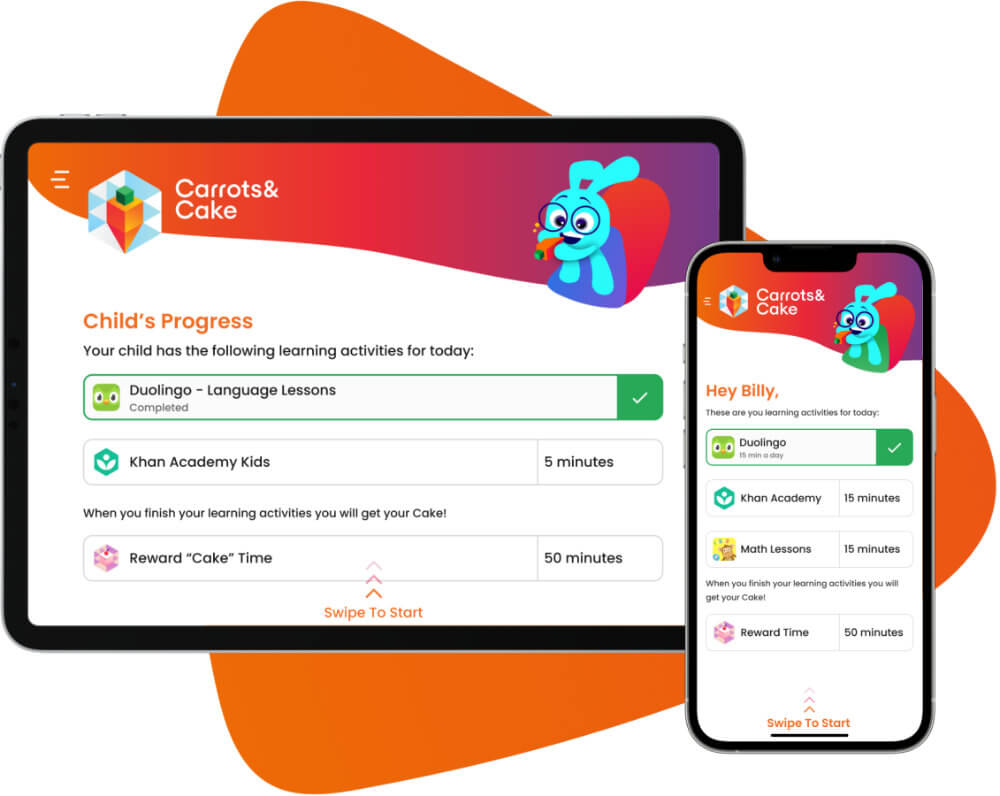
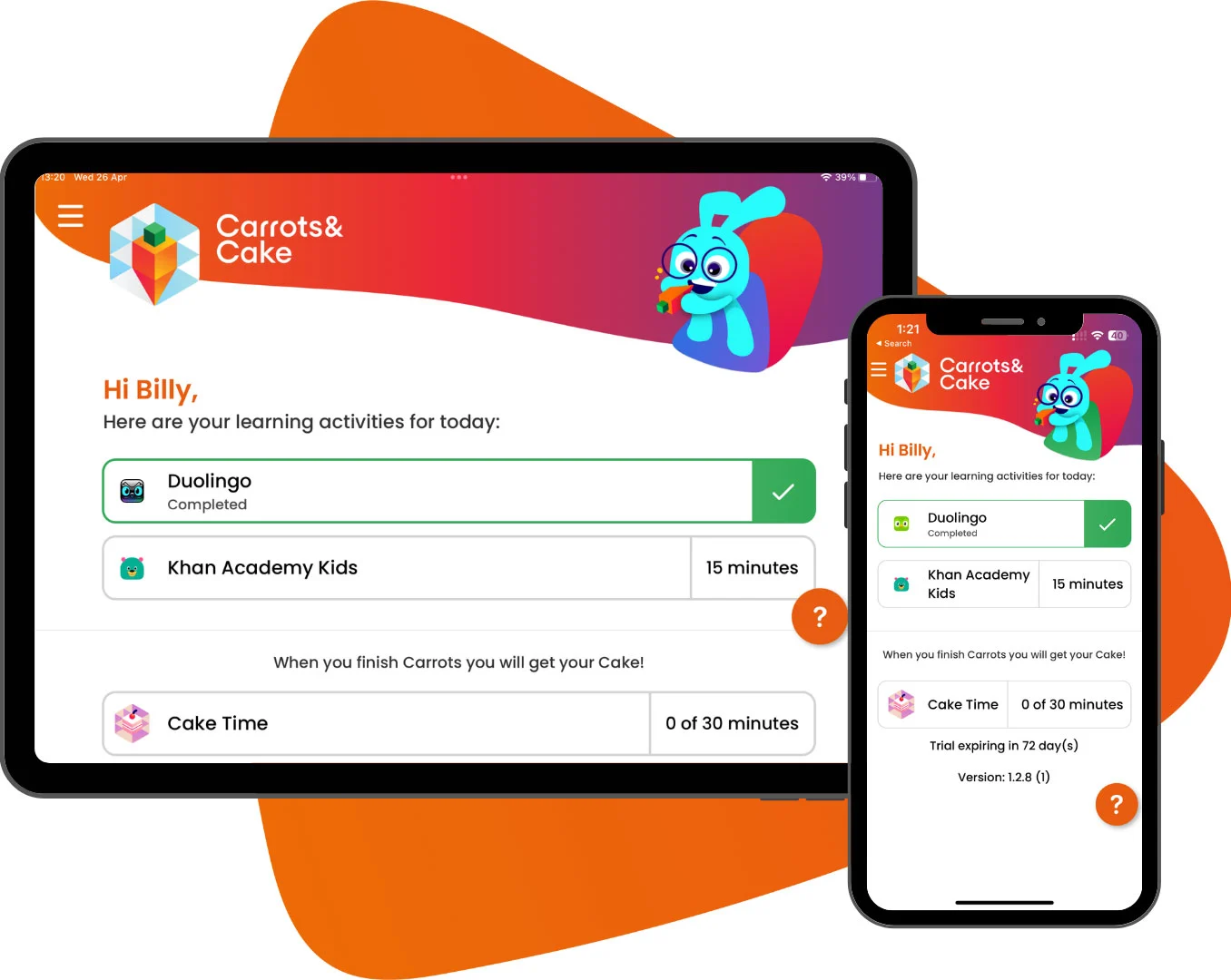
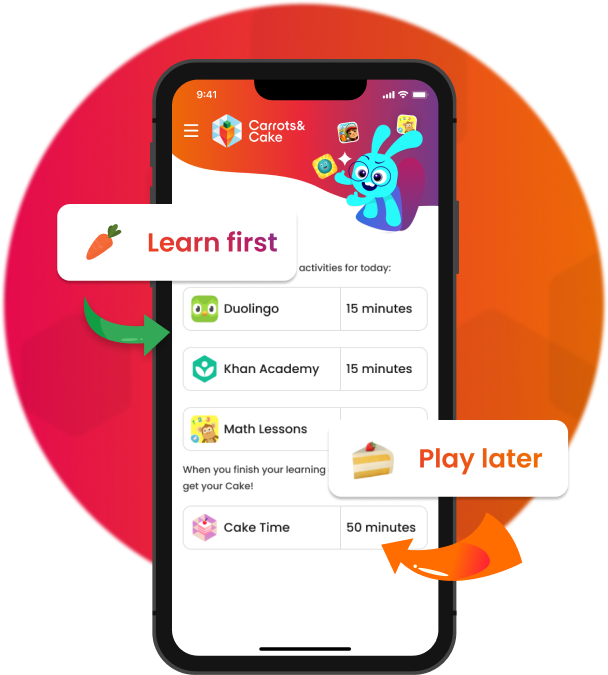
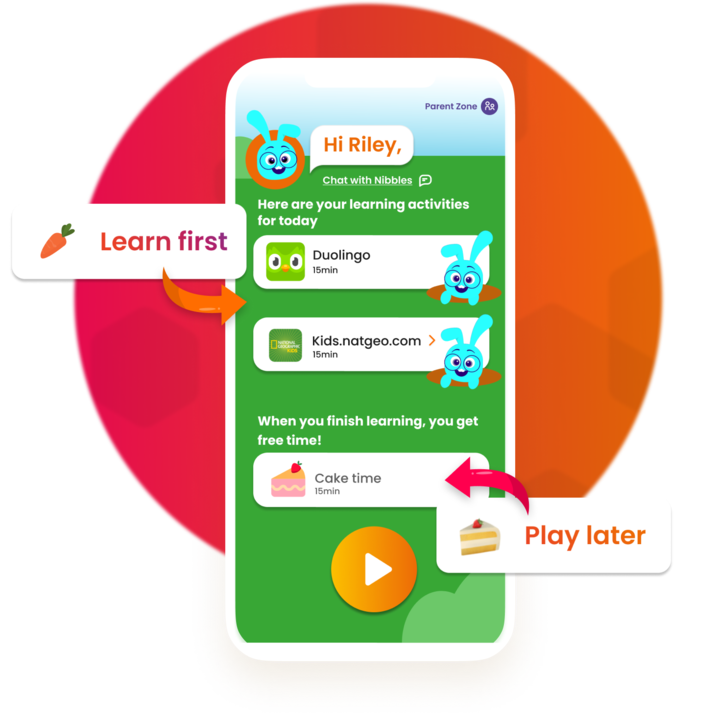
Carrots&Cake is designed to help parents balance kids' HDA and LDA activities.  Parents select “Carrots” - educational apps - which are LDA activities that children must complete before the they can select their own screen activities - typically HDA - “Cake.” Furthermore, requiring the children to complete Carrots results in training them in delayed gratification which is a key skill and component of “grit” which correlates to future success. 

Carrots&Cake advises parents to select “Carrots” which are LDA with a high cognitive load. This simply means children are creating versus consuming.  For instance, complex coding would be a positive Carrot. The child would be focusing, creating, and working toward a final result which equates to delayed gratification.

cnc nov cta button high res 3x v2 27

Unpublished form

Dr. Gwenyth Jackaway, Ph.D.
Media Expert

A great mind in the history of Western philosophy warned about the new medium of communication. It will make our minds lazy, he cautioned.  People will come to be dependent upon it and will lose the ability to learn without it as a crutch. 

What was this ‘dangerous’ new tool?  The alphabet. And its critic? Plato.

Plato’s own education was conducted through verbal exchange, known today as the ‘Socratic Method’. He saw the development of the written word as heralding the end of a cognitive age. In some ways he was right. The shift from an oral to a written culture did bring new habits of thought and scholarship. The brightest minds of the day no longer had to devote their time and energy to memorization, which had, until then, been key to cultural preservation, pedagogy, and intellectual discourse.  

With the alphabet, ideas could be written down, stored, and translated, then transmitted to others across time and space. It was a new age — not necessarily better or worse, but certainly different.  Plato was also right that people stopped focusing on memorization. That was the good news, as they were now freed up to engage in other intellectual endeavors.  The very tool that he saw as dangerous for learning we now see as essential: literacy. 

emojis 1

Communication is so essential to the human experience that we keep inventing new ways to do it.  Each new development in the timeline of media history offers new capacities, allowing us to share and receive messages in new ways. 

When a medium is widely adopted and adapted into our daily lives, there is a ripple effect that impacts various realms, including family life and the education of the next generation. For older generations, it can be hard to adapt to a rapid change in the media environment, especially as kids engage in communication behavior that looks so different from their own childhoods. But different is not necessarily worse.

emojis

There are issues of genuine concern regarding screen time, digital device use, and the attention economy. However, it’s key to remember that technology itself is not the enemy.  Screens are not automatically harmful. Kids can learn from their devices.  Reading a book in print is not essentially superior to listening to it in audio form. 

Different tools of communication engage our brains in different ways, and we can learn through a variety of media forms. There is not an inherent hierarchy of communication technologies, with print or face-to-face interaction reigning supreme. To function successfully in today’s world, we all need to become adept at using the range of tools at our disposal. They each have cognitive benefits to offer.

It is not surprising — nor is it inherently problematic — that ‘gamification’ has become one of the most popular techniques in contemporary education. Games are fun and help people stay engaged. Educational and exercise apps alike include ‘streaks’ for a reason. Such design elements keep people motivated; and when we are having fun we pay more attention, which helps us learn. 

Of course, not everything can be turned into a game. Kids need to practice staying engaged with things even when they are hard and involve a greater ‘cognitive load.’ Carrots&Cake teaches delayed gratification. This helps develop grit. It’s a great example of how kids can learn a valuable lesson and strengthen an important life skill using a device.  Additionally, brief learning sessions, such as spending 10 minutes a day learning a new language, help progress us toward a goal. The encouraging feedback — points, streaks, or awards — built into the learning apps,  appeals to our natural desire for positive reinforcement and helps to keep us going.  

language

Eventually, the pleasure of learning becomes its own reward.  Ultimately, it’s not dopamine that’s the problem.  The problem is expecting all of life to feel like a video game. It can’t, and it won’t.  And that’s the good news. We need to help our kids — and each other — get better at toggling between the highly compelling stimulus available 24/7 at the touch of a button and the pleasures that can only be experienced in real life, away from screens, engaging with each other and the world around us.  

Carrot&Cake’s aim is to help kids develop healthy screen habits. One of the key priorities is to teach balance. Just as it’s not healthy to read all day and get little exercise or social interaction, excessive screen time is also a hallmark of life out of balance. Carrots&Cake is designed to support parents and train kids that high dopamine screen time, like most of life’s pleasures, is best enjoyed in moderation. 

The challenge for all of us living with these technologies is to be intentional about our attentional allocation. After all, where we put our attention on a continuing basis becomes our lives. Technology is neither good nor bad.  It is what we do with these tools, our intentions, and the applications to which we use them that matters the most.  

When parents have questions, they want answers. They seek definitive explanations. If the topic is screen time and devices, parents want clear-cut recommendations and the exact amount of screen time that is best for their child’s stage of development. Unfortunately, the answers are not simple. Carrots&Cake aims to solve that.

Are my kids spending too much time online? How do I monitor screen activity? What are the ‘must try’ apps? Why does my child throw a fit when screen time ends?

In the grand scheme of things, tablets, and mobile phones are relatively new technologies. We are still learning how their use impacts the developing brain. It is an active and robust area of scholarship. While there are still many questions, a growing body of research is beginning to provide answers about why screens feel so hard to put down. The good news is there are ways to support kids to make healthier choices in this new communication environment.

Supervision, behavioral modeling, and rule setting are sound strategies, but they place unrealistic expectations on a parents’ ability to monitor kids’ online activity 24 hours a day. One surefire way to ensure your kids’ screen time is both healthy and balanced is to use a specialized app.

Carrots&Cake might be the answer...

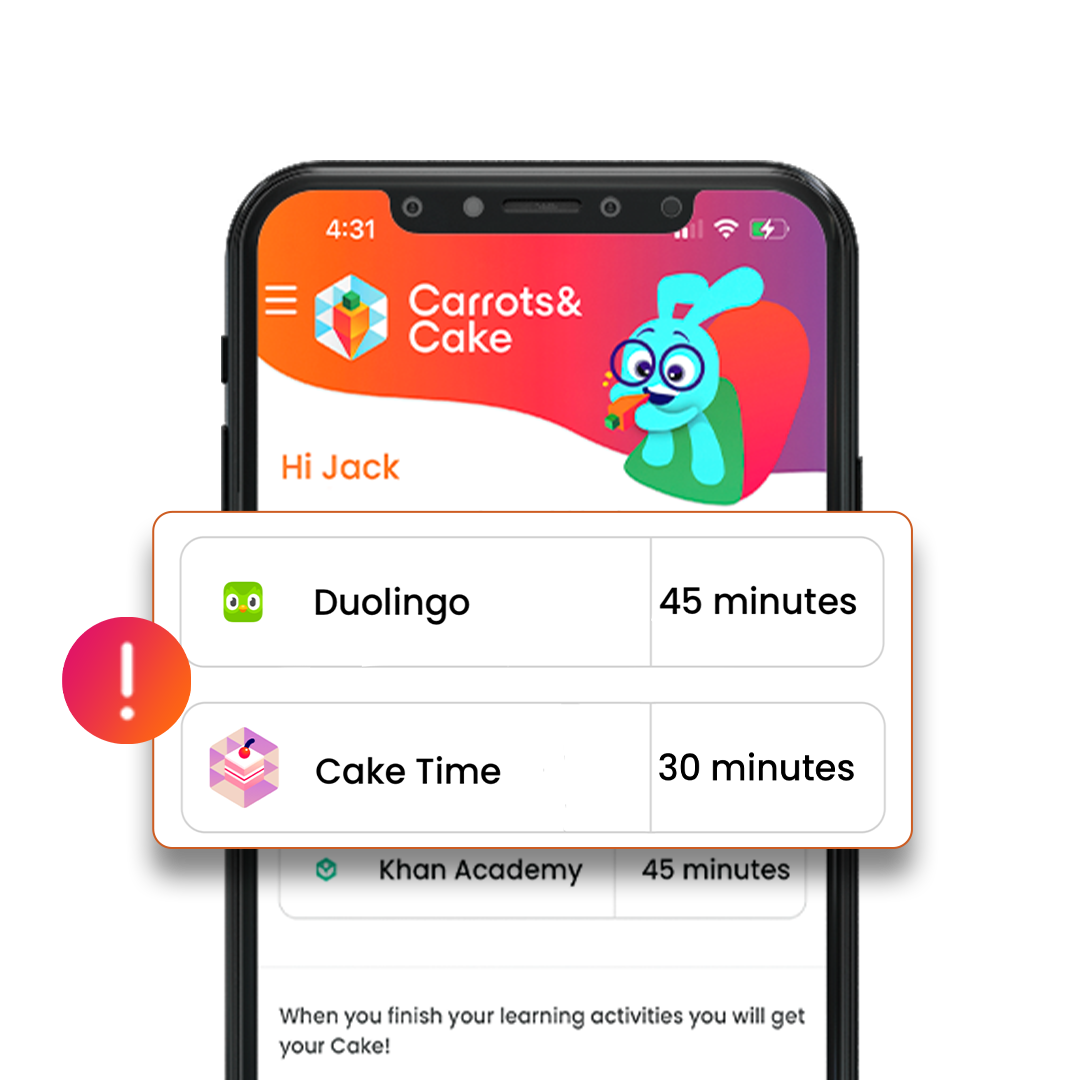
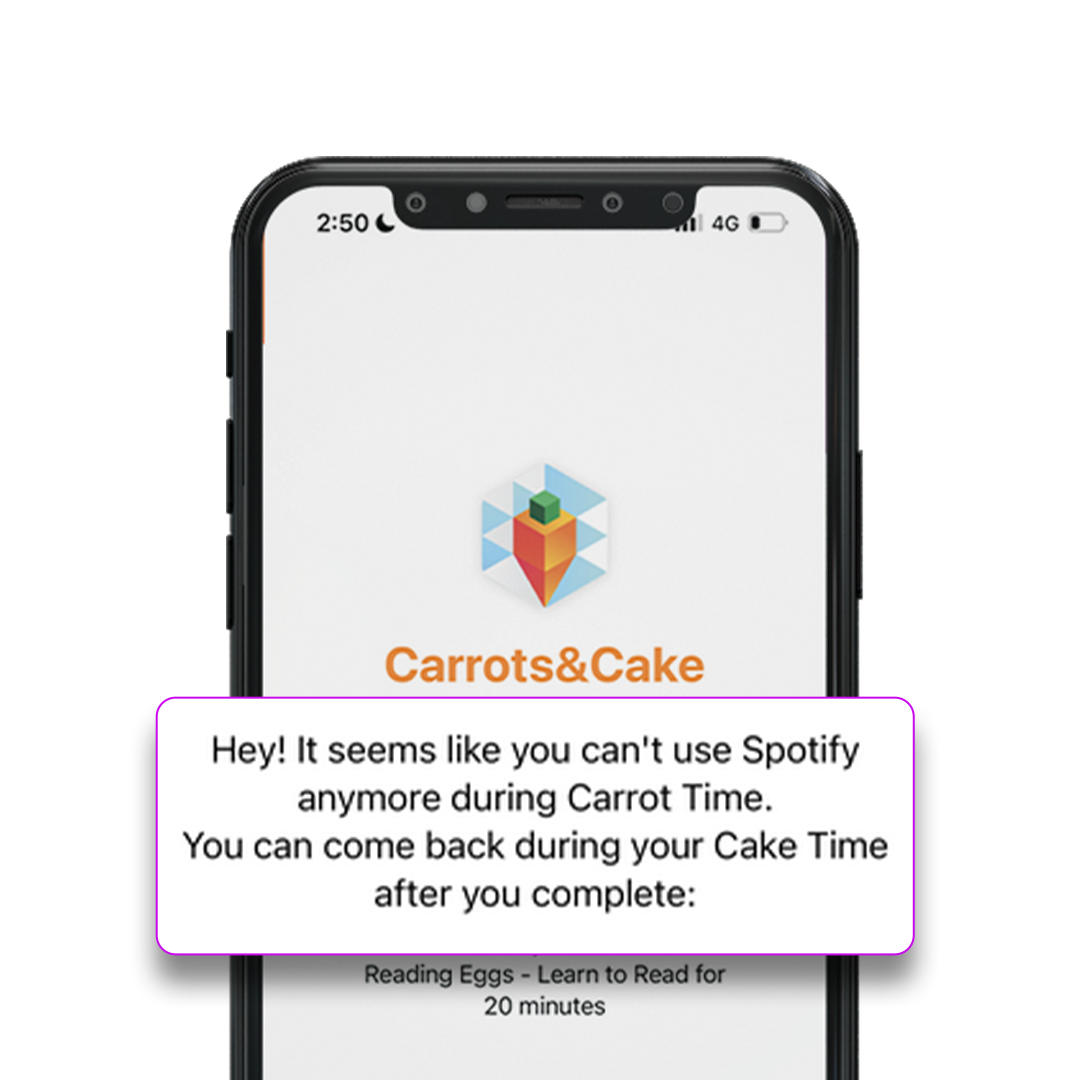
Carrots&Cake is the #1 Parental Control Learning App. It allows parents to program their kids’ devices so children complete learning tasks before their device unlocks to allow games and streaming. It balances learning and fun while delivering parents peace of mind.

The Carrots&Cake methodology is science based, relying on key learning concepts supported by cognitive and behavioral science. The functionality of the app takes into account the neuroscience of reward pathways and was specifically designed to support childhood brain development. Carrots&Cake relies on a foundation of interlocking, research-based principles regarding habit formation, the science of behavior change, positive reinforcement, and the neuroscience of focused attention that is essential for learning. 

Delayed gratification:

One key objective of Carrots&Cake is to assist children in developing their capacity to delay gratification. Numerous studies, including the famous ‘marshmallow test’ demonstrate the importance of the ability to postpone rewards. It is linked to higher levels of self-control, self-confidence, and diligence. The ability to work on a challenging or less rewarding task, while waiting for an end prize helps develop grit and resilience, two key psychological principles that are essential for academic success.  


YouTube video

As adults we are accustomed to the idea that we must persevere through the tedious aspects of our work before we can kick back and watch our favorite TV show at the end of the day. This is a habit that requires self-discipline, self-control, and the ability to focus on the means in order to reach an end. By requiring children to first engage in educational ‘carrot’ apps before they are allowed free time on ‘cake’ apps of their choice, Carrots&Cake strengthens the delayed gratification skill, and reinforces the habit of focusing on challenging tasks before getting to have relaxed fun. 

Dopamine and rewards:

Understanding issues of excessive screen time requires a basic lesson in neuroscience. The best place to begin is learning the key role played by dopamine, a neurotransmitter – a kind of chemical messenger – that is essential for survival. It is one of the brain chemicals associated with pleasure, along with serotonin and oxytocin. Generated when we engage in reward-seeking behavior, dopamine powered our ancestors to hunt for shelter, food, and mates. 

Like adrenaline, dopamine is highly energizing and is essential for motivation. Nature gifted us with a ‘feel good’ chemical to help incentivize us to do things that keep us alive and insure we will continue the species. When it’s flowing freely we feel engaged. This explains why young people playing a fast-paced video game often report a heightened state of alertness. It’s a feeling of aroused involvement and concentration. You can see it in the eyes of people playing slot machines in Las Vegas and on the faces of sports fans deeply engaged in watching a game. There is a sense of focus and concentration mixed with pleasure and intensity.  

Unfortunately, our brains rapidly become desensitized by an ongoing level of heightened stimulus, resulting in a dopamine feedback loop. We seek increasing levels of stimulation as we chase the original rush. This contributes to a variety of addictive behaviors, from gambling to substance abuse. When someone becomes ‘acclimated’ to a high dopamine cognitive environment, stepping away from the screen will feel increasingly difficult. Life off-the-screen does not constantly provide us with ‘extra lives’, bonus rewards, and power-ups. It can be uncomfortable to find ourselves without that kind of highly stimulating cognitive input. This is one reason people often reach for their phones while waiting in line, riding on elevators, and even while sitting on the toilet. When we get used to intense stimuli, even a few minutes of quiet can begin to feel uncomfortable. 

The problem isn’t dopamine in and of itself, but rather too much dopamine. Children, in particular, have not developed the cognitive and behavioral skills to adapt to the dopamine inducing stimulus that screens supply. 

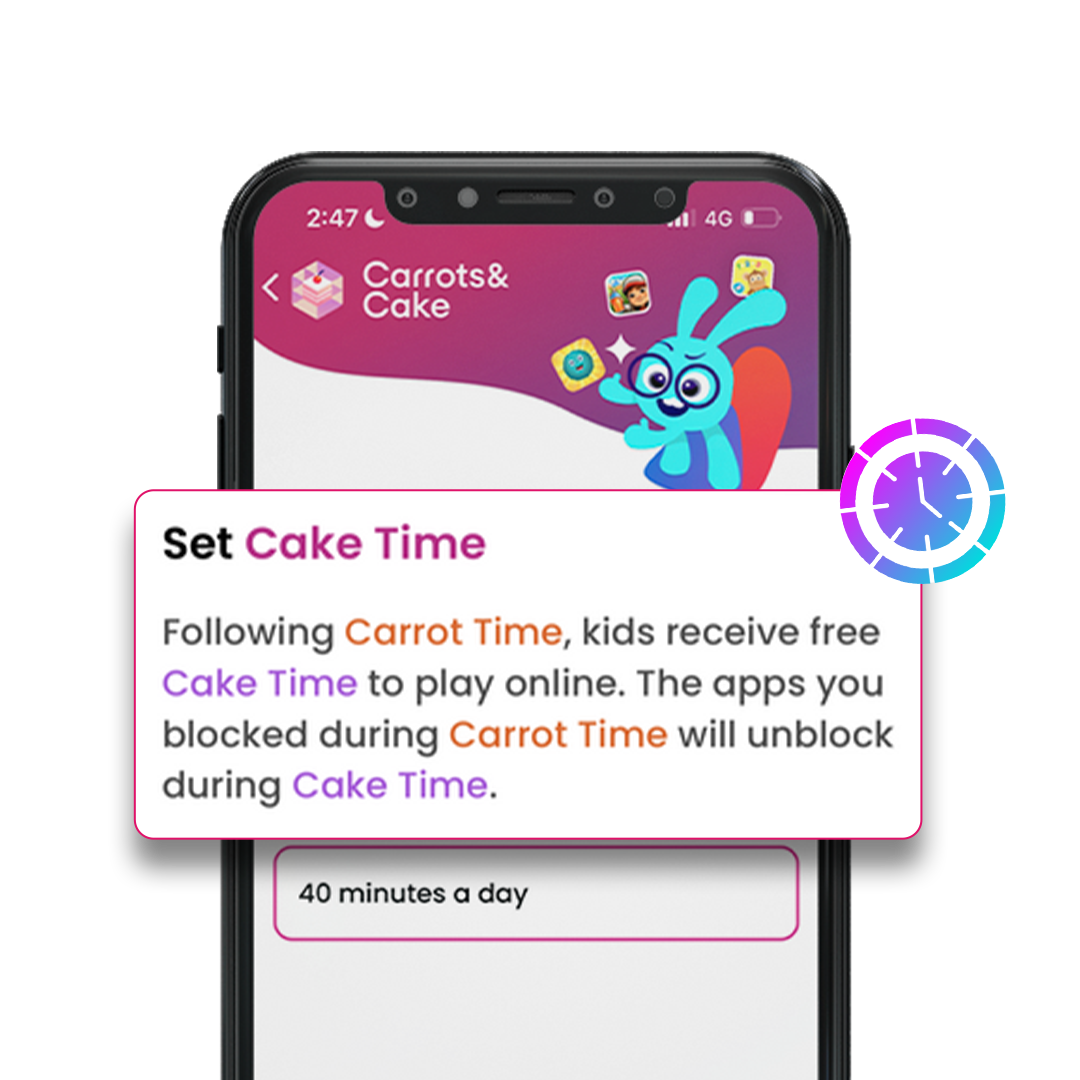
By placing a clear and fixed time limit on kids’ free ‘cake’ time, Carrots&Cake helps children learn to step away from high dopamine stimuli. After several reminders that screen time is ending, the child’s screen shuts down until the next day. There is no negotiating and no begging. This consistency can help kids strengthen a skill that has become essential for thriving in the digital age: the ability to put down the device when their allotted time has expired and transition into off-line activities. 

untitled 42 × 29.7 cm 42 × 21.3 cm 1200 × 609 px

Cognitive Development:

It is tempting to believe the difficulties with excessive screen time can be overcome through motivation and self control. Unfortunately, it’s not that simple for kids – or even adults. The dopamine spikes associated with games and scrolling are highly compelling and increasingly difficult to disengage from. For children and teens this is even more pronounced. 

Brain development in human beings takes a long time. It’s not complete until we reach our mid-twenties. The prefrontal cortex – the part of the brain responsible for self control, executive function, and risk taking – develops last. This is one of the reasons children and teens have trouble with impulse control and engage in risky behavior. It is why it’s so hard for them to disengage from their devices when prompted. It is also why it’s important not to blame or shame them when they struggle in this area. Kids’ developing brains are literally not yet ‘wired’ for self control. 

untitled 42 × 29.7 cm 42 × 21.3 cm 1200 × 609 px 1

Cognitive load and micro learning sessions:

Just as many people prefer dessert over health food, this is also true for cognitive stimulus. Tasks that require intense concentration for extended periods of time – like abstract mental processing, complex reasoning, calculation, and analysis – are taxing. Our minds easily wander in search of ‘relief.’ This explains why you find yourself reaching for your phone to scroll through Twitter or Instagram in the middle of preparing your taxes. 

Fortunately, the ability to stay focused and engaged on highly cognitive tasks for extended periods is something that can be strengthened over time. Like strength training, focus is a kind of cognitive ‘muscle.’ With practice we can learn to tame our minds and concentrate for longer periods of time. This skill is especially important for learning.

Carrots&Cake provides children with small sessions of exposure to abstract concepts (e.g. math, languages). Much like high intensity bursts of aerobic activity or strength training, these ‘micro-learning’ sessions allow kids to practice staying focused on challenges for a fixed time. It gives them quick doses of learning, which, when repeated often enough, accumulate to real results in the area of study. You may want your child to start off with just a few minutes of ‘carrots’ as they grow accustomed to focusing in this way. Eventually, you should extend the length of the learning session. This will help your child strengthen their attentional resources. It will serve them academically as well as socially, and developmentally.

email haeders 1200 × 630 px 1

Gamification 

When it comes to education it is probably not at all surprising – nor is it necessarily problematic – that gamification has become one of the most popular tools in contemporary teaching. Games are fun. They help people stay engaged. Educational and exercise apps alike include ‘streaks’ for a reason. Those design elements keep people motivated. When we have fun we pay more attention, this helps us learn. Encouraging feedback – such as points and rewards – built into learning apps appeals to our natural desire for positive reinforcement and helps us persist. Eventually, the pleasure of learning becomes its own reward. 

Parents can set up Carrots&Cake using any of the learning apps their family already owns. Alternatively, Carrots&Cake will create a list of appropriate apps tailored to your child’s age and developmental stage. When searching for education and learning apps, parents should try to find ones that deliver lower levels of dopamine and have a high cognitive load. Carrots&Cake is independent from the apps they recommend, and their reviews are impartial.


The Science of Behavior Change

Over the past two decades, there have been great advances in our understanding of the cognitive and behavioral dimensions of habit change. It was once assumed that simply providing people with information about the harms of a particular behavior (e.g. smoking) would be sufficient to cause change. It was not. Even scary labels on cigarette packs that warn “smoking kills” is not enough to motivate people to quit. It follows that simply telling kids that too much screen time is bad for them won’t be enough. 

One approach proven helpful in affecting behavioral change is ‘nudges’ that encourage people to make better choices. Nudging is grounded in the idea that small cues can influence people's behavior in a positive way. For example, placing fruit at eye level in a grocery store or posting the number of calories on a menu are simple nudges that encourage people to make healthier choices.  Behavioral nudges are often delivered digitally, like reminders to get the next Covid vaccination. Nudges can remind us that we’re running out of time to do something essential like pay a bill, file our taxes or schedule a dentist appointment. Carrots&Cake utilizes nudges to alert kids to how many more minutes of ‘cake’ time they have left. This reminds kids that time is almost up, and they should finish their games. Kids are less surprised when time runs out, and they are more emotionally prepared for the transition to offscreen activities. 

The earlier we help kids understand that digital devices, like most pleasures in life, are best enjoyed in moderation, the more likely they are to develop healthy and balanced technology habits. Carrots&Cake is here to help support kids, parents, and families.

Also Read: What Sets Carrots&Cake Apart on Screen Time?

If you’d like to dig deeper into the science behind Carrots&Cake, we recommend that you take a look at some of these reading recommendations:

Behavioral Nudges:  Sunstein, C. and Thaler,R. (2009), Improving Decisions about Health, Wealth and Happiness,  New York: Penguin Books.

Delayed gratification:

Microlearning: Marcia Izabel Fugisawa Souza, Sérgio Ferreira do Amaral (2014),   Educational Microcontent for Mobile Learning Virtual Environments, Creative Education, Vol.5 No.9.

Dopamine: Lembke, A.,(2021). Dopamine Nation: Finding Balance in the Age of Indulgence. New York: Dutton

Gamification: Kapp, K., (2012). The Gamification of Learning and Instruction: Game-based Methods and Strategies for Training and Education. San Francisco: Pfeiffer

Cognitive Development: Tarullo, A., Obradovic, J., Gunnar, M., (2009). Self Control and the Developing Brain, Zero to Three, January issue.

Tracking down the best educational apps can be tricky. There are truly great ones, but they’re often overshadowed by over-stimulating, gamified apps with huge marketing budgets and endless advertising dollars.
With the help of educators, Carrots&Cake tested hundreds of apps to bring you a list of the top 9 learning apps that will help your children get the most out of screen time.

Also Read: The Top 10 Educational Apps for Kids in Q2 2023

Math apps


Moose Math

moose math

Moose Math is a fun and friendly math app perfect for little ones just learning the basics. Suitable for children aged 3-7. The app focuses on helping children build their basic computational skills with intrinsic visuals that help kids get interested and excited about numbers. The app is developed by Duck Duck Moose, a non-profit educational app developer partnered with Khan Academy with the goal of delivering free, high-quality educational apps to children worldwide.


Pet Bingo

Pet Bingo

A math app for children aged 5-10, Pet Bingo is designed to help kids advance their arithmetic FUN-damentals with addition, subtraction, multiplication, and division. Another creation coming from Duck Duck Moose, Pet Bingo offers multiple skill levels and keeps kids engaged longer than traditional school work.


Kahoot Multiplication

Kahoot Multiplication

A math app that helps kids hone their multiplication skills through games. Kahoot Multiplication is ideal for children aged 6-9. With more than 20 games to choose from, kids learn to recite their times tables through multiplication drills that are fun and rewarding. 


Reading


Duck Duck Moose Reading 

Duck Duck Moose Reading

Based on the Foundational Skills of Reading at Kindergarten, Duck Duck Moose Reading helps children 3-7 years old improve basic reading and comprehension. Kids play alongside animals at the zoo while bulking up their phonics and spelling skills. Tested extensively in kindergarten classrooms.


Languages


Duolingo

Duolingo

Duolingo is a versatile, multi-language app that allows users to strengthen their mastery of more than 40 languages. As the largest and most widely used language app on the market, Duolingo ranks highly on our list of recommended apps. Duolingo relies on a certain level of basic conversational skills (in a first language) to properly benefit from their translations, so it’s recommended for children aged 6 and above.


Word Wagon

Word Wagon

Ideal for 2-6-year-olds, Word Wagon is a fun, interactive English language app aimed at teaching early literacy skills, including letters, phonics, and spelling. Like several other apps on this list, Word Wagon was developed by Duck Duck Moose. Its content is aligned with America's Common Core State Standards for early language development. The app follows an engaging storyline that helps keep preschoolers motivated while teaching letter names, sounds, and basic four and six-letter words.


Duolingo ABC

Duolingo ABC

Duolingo is a language-learning application that helps young kids develop basic English skills as a first or second language. This award-winning program was developed by the team behind Duolingo. It's specifically designed to work with children aged 3–7 years old, strengthening their foundation for future academic endeavors.


Coding


Scratch Junior 

Scratch Junior

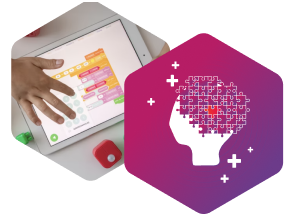
Scratch Junior aims to help children aged 5-7 develop basic coding skills. Developed by a collaborative team from Tufts, MIT, & the Playful Invention Company, Scratch junior is a doorway into coding. Young kids will get their first taste at authoring their very own interactive stories and games. 


Creativity


Flipaclip 

Flipaclip

Ideal for kids aged 7 and above, Flipaclip is a fun and imaginative app for expanding kids’ creative spirits. Through 2D animations, kids’ pictures come alive with this animation video maker. Flipaclip was developed by Visual Blasters LLC, a US-based software company focused on developing apps geared towards multimedia and animation. 


But do educational apps genuinely facilitate learning? Let's hear from the experts. Gwenyth Jackaway, Ph.D. expressed her view:


hex dr gwenyth

"The emergence of the smartphone, the tablet, and apps have truly opened new pathways in the world of teaching and learning. We are still very much in the early days of this educational revolution. Now students can learn at their own pace, remotely, supported by technology designed to keep young minds engaged and motivated, provides personalized feedback and helps make learning fun."

— Dr. Gwenyth Jackaway, Ph.D.


Conclusion 

Reading up on learning apps can be overwhelming. Thousands of apps claim to offer valuable educational insight, but many do little more than waste time – not what you're looking for in a fun after-school activity! The apps recommended on this list have been independently tested and backed by educators to ensure your child’s time investment in learning pays off.

Of course, there are thousands of great entertainment apps out there too. With Carrots&Cake, you can rest assured your child gets a healthy balance between fun and learning. Carrots&Cake allows you to choose your favorite educational apps that your child must complete before other apps are unlocked. Download Carrots&Cake now in the app store.

cnc nov cta button high res 3x v2 40

Looking for ways to achieve a healthier balance of screen time in your family? Dr. Clifford Sussman, MD, has some excellent advice that can help you get there. Here are his top tips:


Change Environmental Cues

Make changes in your home that signal to your family that it's time to unplug. This could include designating certain areas of your home as tech-free zones or scheduling screen-free activities throughout the day.


Set Clear Limits

Establish clear boundaries for screen time, and make sure everyone in the family understands and agrees to them. This could include limits on total daily screen time, designated times of day for tech use, or guidelines for appropriate content.


Use Technology to Your Advantage

Instead of fighting against technology, find ways to use it to your advantage. For example, use apps that monitor screen time, track usage, or block access to certain sites.


By following these tips from Dr. Sussman, you can help your family achieve a healthier balance of screen time. With a little effort and creativity, you can create a tech-friendly environment that supports your family's well-being and relationships.


YouTube video

If you want more digital parenting tips, be sure to check out our website. We help parents navigate the ever-changing landscape of screen time and digital well-being.

You can get the Carrots&Cake app, a science-based app built by parents, and developed with doctors, teachers, and scientists. Carrots&Cake make screen time more beneficial and less addictive.

Download the Carrots&Cake app today and enjoy a 7-day free trial. Why wait? Take the first step toward a healthier, happier digital life for you and your family with Carrots&Cake.

registered logo (2)
FAQ
Carrots&Cake Parental Control is a member of the kidSAFE Seal Program.
tiktok (1)
text-align-right